Malawi’s food relief and nutrition intervention face uncertainty following a $68 million (about K118 billion) World Food Programme (WFP) funding gap.
Initiatives under threat include hunger relief, emergency logistics, nutrition support, food assistance and school feeding programmes.
The deficit forms part of WFP’s $86.5 million (about K149 bi l lion) funding requirement for the July- December 2026 period, according to the agency’s Malawi Country Brief published on July 23.
WFP said in its report that the funding gap could disrupt humanitarian operations planned for the next six months.
The agency says it has assisted 855 000 people, distributed 184 metric tonnes (MT) of maize and provided nutritious food and vegetable oil to 25 499 households.
WFP also warns that anticipated El Niño conditions could increase nutrition needs, with an estimated 1.1 million people expected to require support. The school feeding programme is among the most affected.
It said unless additional funding is secured, its operations could be disrupted from September, leaving nearly 594 000 of the 769 150 learners it currently supports without school meals.
The agency requires $19.7 million (about K33.6 billion) to sustain the programme throughout the 2026/27 academic year.
Currently, school feeding reaches 2 647 of Malawi’s 5 979 public primary schools, representing 44 percent coverage, leaving 3 332 schools yet to benefit despite the government’s target of nationwide coverage by 2030.
Among implementing organisations, Mary’s Meals supports 1 071 schools while WFP covers 784.
Reads the brief in part: “Overall, WFP Malawi is facing a net funding shortfall of $68 million between July and December 2026, without which critical life-saving assistance will be interrupted.
“To sustain reduced rations for refugee support until January 2027, WFP requires $6.8 million, while restoring full rations would require $11.4 million. To sustain school meals operations and protect gains throughout the 2026/27 academic year, WFP urgently requires $19.7 million.”
On the anticipated El Niño, WFP said it is helping government strengthen early warning systems, climate forecasting and preparedness planning , adding that predictable financing would enable timely anticipatory action and emergency response.
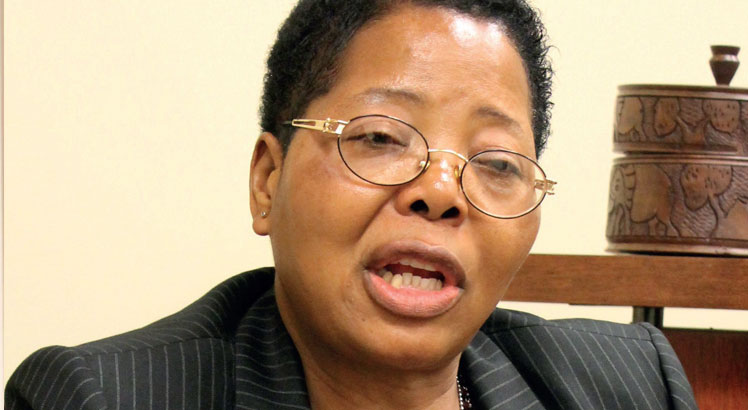
Nutritionist Mary Shawa has since described the funding shortfall as a major setback that could reverse gains in food security and nutrition.
In an interview, she said disruption to school feeding could increase school dropout rates, while cuts to nutrition and refugee assistance would disproportionately affect vulnerable groups.
“It is high time we stopped politicising food security. Last year, the country had large quantities of maize, much of which was not purchased. That maize could have been used to support interventions that we are now seeking from development partners,” said Shawa.
OfficialsfromtheDepartment of Disaster Management Affairs and the Ministry of Education, Science and Technology were unavailable for comment.
However, in an earlier inter view, the ministry acknowledged that reduced WFP support would threaten the school feeding programme